

The Finnish economy is gradually recovering but is overshadowed by the crisis in the Middle East, higher energy prices and an uncertain economic outlook, according to the forecast released by the Ministry of Finance on Tuesday.
Economic growth is boosting general government revenues, but the deficit remains wide, said the ministry.
Gross domestic product (GDP) is projected to grow by 0.8 per cent in 2026, by 1.6 per cent in 2027 and by 1.7 per cent in 2028.
Economic growth was stronger than expected early in the year, but part of this growth is explained by temporary factors. The economic outlook also involves a great deal of uncertainty.
The forecast assumes, based on oil futures prices, that the crisis in the Middle East will subside towards the end of the year.
However, oil prices will remain elevated, and central banks will raise interest rates this year.
A prolonged crisis could further increase oil prices and interest rates, which would slow global and domestic economic growth significantly more than projected.
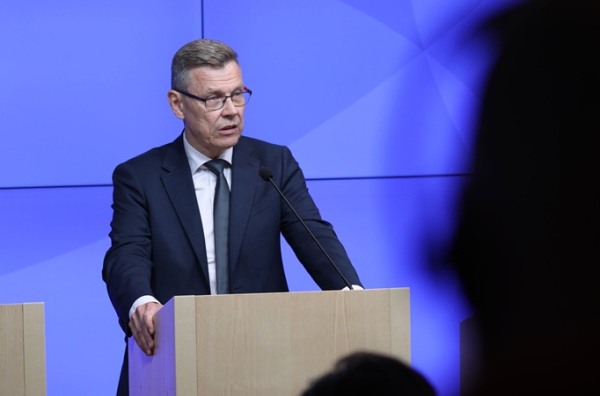
“The economic outlook for the start of Finland’s next government term is still foggy. The outlook for public finances, however, is clear. Structural imbalances have to be corrected, which will require Finland to carryout extensive, fast-acting direct consolidations in the next parliamentary term,” said Director General of the Ministry Mikko Spolander.
The Middle East crisis has raised oil prices and interest rates, which is dampening the outlook for global economic growth as well as growth in Finland’s export markets.
Nevertheless, Finland’s exports are showing relatively strong growth despite the international operating environment. However, the impact of net exports on economic growth remains negative, because fighter jet purchases and other investments are driving imports up faster than exports.
Household purchasing power is suffering from higher energy prices, rising interest rates and a weak labour market. At the same time, pay rises and income tax cuts are boosting the growth of disposable income.
Consumer confidence remains low, however, which is particularly visible in the demand for durable goods, the housing market and the high consumer savings rate. Private consumption is expected to grow 0.8 per cent in 2026 and to continue growing in 2027–2028 as purchasing power improves.
Investments will see strong growth in 2026, particularly driven by defence investments. Fighter jet deliveries will be reflected in strong investment growth but will have a limited impact on domestic production as they are mainly imports. Projects related to the energy and technology transition, data centre construction and intangible investments will also boost investments.
The outlook for construction involves both positive and negative trends. Commercial construction is showing slight growth, but housing construction has yet to recover.
The housing market has slowed again, housing prices continue to fall and purchase intent is low. It is estimated that housing construction will continue to contract slightly this year with the turn to growth postponed to 2027.
The labour market has been weaker than projected. The number of people in employment fell again early in the year, and unemployment has grown more than expected. In particular, the number of permanent and full-time jobs has dropped in the private sector. It is projected that the unemployment rate will grow to 10.4 per cent in 2026. Employment is expected to improve starting in 2027 as economic growth picks up speed, but the labour market recovery will remain sluggish.
Unemployment will remain high throughout the forecast period, though it is expected to drop slightly in 2027–2028.
Despite accelerating economic growth, the general government budgetary position will not improve much during the forecast period. The better economic cycle will be reflected in public finances as increased tax revenue this year. At the same time, the entry of fighter jet purchases as investments will weaken the central government budgetary position in particular starting this year. As a result of these opposing factors, the general government deficit will be 4.4 per cent of GDP this year.
General government finances will not improve in the coming years without new consolidation measures, as defence expenditure will continue to grow throughout the forecast period.
Debt interest payments will also grow as a result of the increased debt ratio and higher interest rates. Increased expenditure means that a better economic cycle alone will not be enough to bridge the general government deficit, which will remain at about 4.5 per cent of GDP until 2030. The wide general government deficit is structural in nature.
The general government debt ratio will pass 90 per cent of GDP this year. Wide deficits will keep the debt ratio on a growth track for the entire forecast period despite faster economic growth. The debt ratio will reach nearly 99 per cent by the year 2030.
The ministry said that the forecast was prepared before the information received on 15 June 2026 concerning a preliminary peace agreement between the United States and Iran. If the agreement leads to a lasting peace and the reopening of the Persian Gulf, it will have a positive impact, particularly on growth this year.
However, the impact on the forecast is not large, as the crude oil futures prices on which the forecast is based have consistently incorporated the assumption that an agreement would be reached during the course of this year. The increases in oil prices and interest rates that have already occurred have imposed economic costs, which will weigh particularly on growth this year.
The Economic Survey is the Ministry of Finance’s independent economic forecast and is published four times a year: in the spring, summer, autumn and winter.
- Govt
- Forecasts
- Slow
- Economic
- Recovery
Source: www.dailyfinland.fi
